


Plan Your Trip to Boston for Soccer in 2026
The FIFA World Cup is rapidly approaching, which means it’s time to start finalizing that trip to Boston. Before you hit “book” though, learn more about Boston as a host city and how to get the most from your visit for the FIFA World Cup. Boston may not be in the top 10 of U.S. cities by population, but it remains the packed heart of a densely populated region. Food, drink, sports, art, and education all shine in The Hub, and are all worth exploring in more detail in this Boston World Cup guide.
Why Boston is a Great Base for Soccer Fans
There are countless reasons why Boston makes for a great World Cup host city that go beyond just a stadium and amenities. One huge reason is that Bostonians and New Englanders will help you through the whole tournament. While this Boston World Cup guide brims with sage advice, it can only get you so far. When that happens, just tap a nearby Boston local for some tips, and they’ll oblige. A quick cultural note, though, do not get offended if the interaction doesn’t seem “nice,” as pleasantries are not something the region is famous for.
Beyond a helpful, if not naturally outgoing, population, here are some other benefits to making that trip to Boston for the World Cup:

Transit
Boston offers one of the most robust public transit systems among any World Cup 2026 host city. The specially designated Stadium Train will provide a crucial link for fans making the trek from Downtown Boston to Boston Stadium on matchdays.

Culture
Boston is more than the capital of Massachusetts; it’s the capital of New England. U.S. and International visitors will get an up-close look at a distinct American culture that traces its roots back to Puritan settlers and later immigrant communities. Unique language, values, and music will all be on display.

History
Boston and New England will be at the epicenter of the America 250 celebration because of the region’s important role in American Independence. Expect big celebrations between the end of the Group Stage in June and the World Cup Boston quarterfinal match on July 9th.

Regional Connections
Boston also offers a high-level of connectivity to other major hubs. Trains can support a day trip to Boston or a day trip from Boston out to other interesting cities and towns. You can even reach other host cities like Philadelphia and New York.

Weather
Boston in the summer can be humid and warm, but usually with enough of a breeze off the water to create a comfortable climate. Only Mexico City can compete with Boston’s weather for this edition of the FIFA World Cup.
How to Plan a Trip to Boston
Getting to Boston differs depending on your method of transportation and where you’re coming from, but there’s one common feature—it’s fairly simple. A trip to Boston also might make the most sense for anyone making their first stop in the U.S. from a European city, as it will be the most familiar and closest city.
Boston Area Airports & Transit
There are three primary ways to get to Boston: planes, trains, and automobiles. The feasibility of each method depends on where you’re originally coming to Boston from—cars and trains just won’t be possible if your origin point is outside of North America. Here are some tips on each:
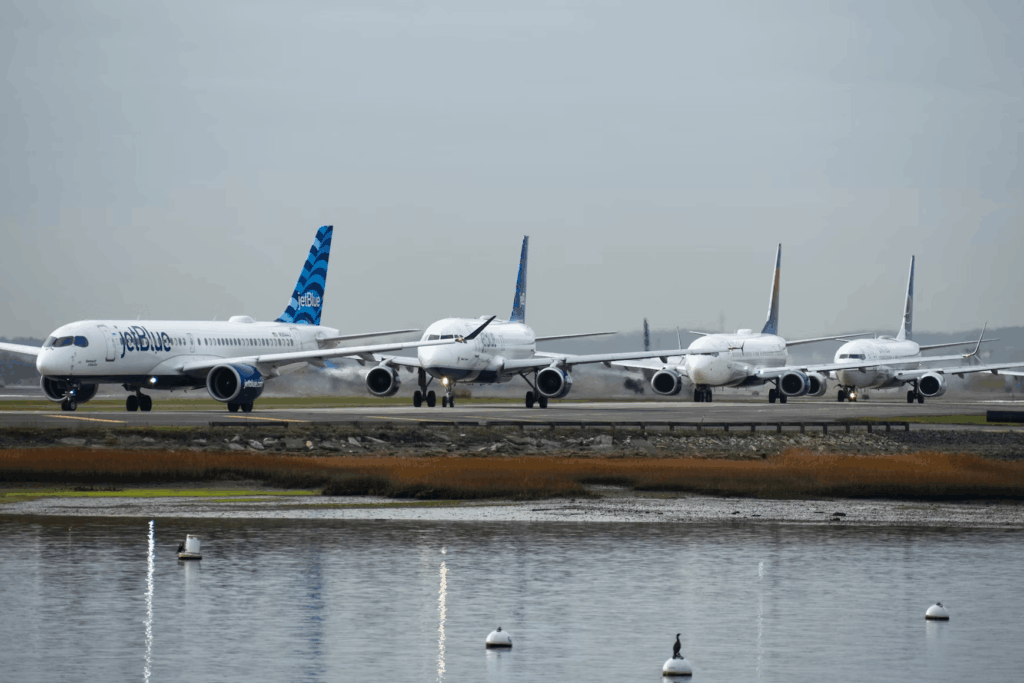
- Airports: There are 3 Boston area airports: Logan Airport in East Boston is the closest and largest, and will likely be the arrival airport for flights from abroad. T.F. Green in Warwick, RI, might be a great option for U.S.-based flights on budget airlines. It’s just a train ride away from Boston, and is closer to Boston Stadium. Manchester Airport in New Hampshire offers similar options for U.S.-based travelers but is north of Boston.
- Train: Boston is on Amtrak’s northeast corridor, the pinnacle of U.S. train travel. Any fans looking to get to World Cup Boston games from Washington D.C. or points north should consider the train as a viable option.
- Car: Boston is also on Interstate 95, making it accessible for anyone living between Maine and Florida. The drive varies, but it is an option for anyone who budgets in a couple of travel days into their trip to Boston.
Best Time to Arrive & Length of Stay
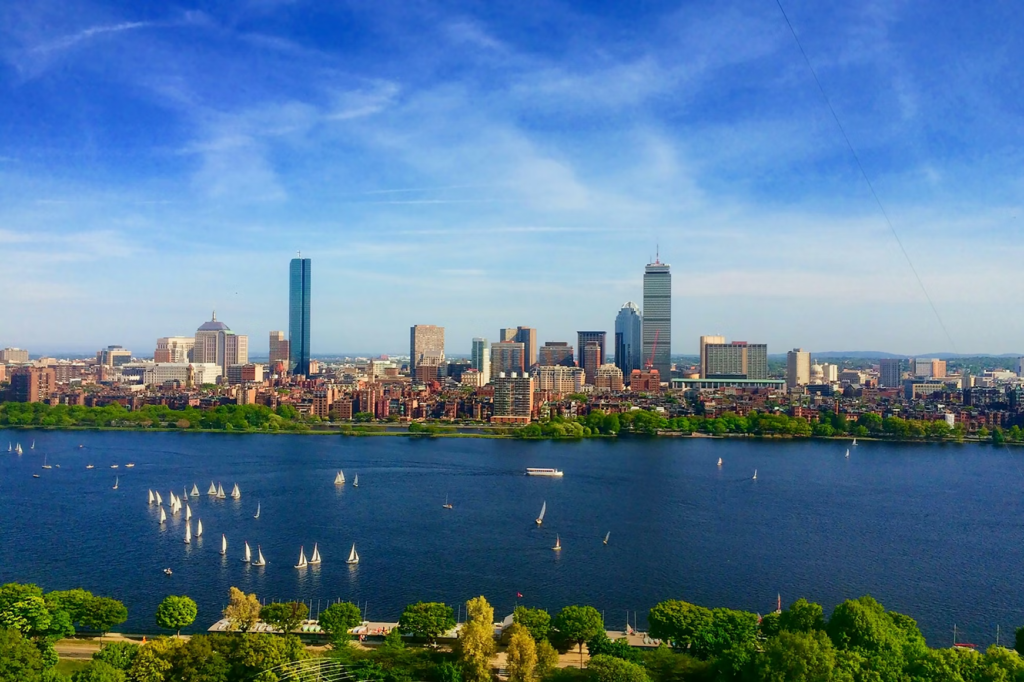
The best time to arrive in Boston depends on what you’re looking to get out of your World Cup Boston experience. If you’re planning a trip to Boston for a specific team or game, you’ll want to aim to arrive at least one day early and two if you’re able. That way, flight delays don’t become fatal to your plans. It also gives you time to familiarize yourself with Boston in relation to Boston Stadium (there’s about 30 mi/48km between them).
If you are able to stay longer than just a match, Boston is definitely worth the additional time. A two-week stay, from June 28th to July 11th, might be the best time to arrive and the perfect length of stay. Within that time, you’ll be able to watch the Round of 32 match at Boston Stadium on June 29th and the Quarterfinal Match on July 9th. In between these matches, you can explore Boston to the fullest while still having time for day trips to other historic and significant cities nearby.
Where to Stay During Your Trip
Like the method and timing of travel to Boston, where to stay once you get here depends on what you’re looking to get from your trip.

Choosing the Right Neighborhood
If you’re looking for a trip that’s equal parts Boston World Cup and just plain ol’ Boston, then you may want to look at staying within the city limits or neighboring towns. Your neighborhood will color your trip in recognizable ways, so be sure to pick one that you feel comfortable in, or that makes a fun step outside your comfort zone. Boston has historic neighborhoods, artsy areas, culturally significant neighborhoods, and streetcar suburbs to consider.

Hotels vs. Short-Term Rentals
Another consideration as you plan your trip to Boston is whether to stay at a hotel or a short-term vacation rental. If you’re from Europe planning a solo trip to Boston, it’s important to note that hostels aren’t as popular in the US.
As far as the decision between hotels and short-term vacation rentals goes, you can probably find an STVR closer to Boston Stadium, with the exception of two hotels on stadium property. One word of caution, though: there may be many scammers looking to cash in on World Cup Boston by creating fake STVR listings.

Staying in Nearby Cities
If you’re a diehard supporter of a team playing at Boston Stadium and your only care is watching them play, you may want to look up hotels and short-term vacation rentals in Wrentham, Foxboro, Attleboro, Mansfield, and Pawtucket. These will put you closer to the stadium than any hotel in Boston could. Pawtucket is the furthest out and is just a 20-minute drive to Boston Stadium.
Getting Around the City
As mentioned, another major advantage of Boston as a World Cup host city is that it is a “car-optional” city. You likely don’t have an unlimited budget for your trip to Boston, and a rental car can easily siphon a large chunk of that amount. So if you’d prefer to go without the car on your trip, go knowing you’ve got plenty of options available.
Public Transportation Basics
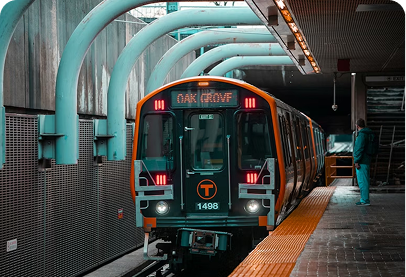
Boston Public Transportation, officially the MBTA but known locally as the T, offers subways, buses, commuter rails, paratransit, and ferries. The subway is four lines extending out from downtown in the four cardinal directions. There are 177 bus routes moving people to and from major transit, commercial, and residential hubs. The commuter rail is a standout feature of the system, connecting points far north, south, and west of Boston. The ferries offer service from the city’s waterfront out to the North and South shore areas.
Walking, Biking, and Rideshares
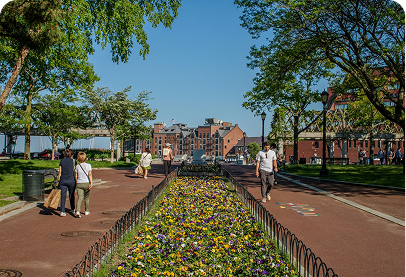
For those who are able, they will find Boston to be an incredibly walkable city. Whether you want a late-night bite, a grocery store, a bodega, or a cultural institution, odds are it’s just a few blocks away. What these look like in practice depends on the neighborhood you choose—if you’d like those late-night bites to be Italian pastries, stay in the North End, for example.
You can also bike from nearby towns like Allston and Cambridge into downtown Boston. With bikeshare options available in both traditional and electric bikes, it’s never been more possible to commute around downtown Boston. Even better is the network of parks and greenways you can ride on, completely devoid of contact with cars.
Boston also provides the major North American rideshare options of Uber and Lyft. These have specific rideshare pickup zones at major locations like the airport or stadiums, so be advised and on the lookout for where those locations are. These methods of transportation are subject to surge pricing based on demand, so plan accordingly.
Late-night Transportation Tips
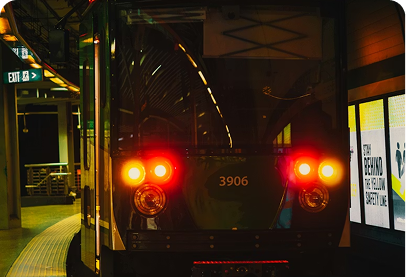
New York is the “City That Never Sleeps”, and it has a public transportation system that doesn’t either. The same cannot be said for Beantown. Boston’s public transportation wraps up service about an hour before last-call at 2am, making careful planning a necessity. If you’d like to take public transit home, plan an earlier departure from your late-night plans—before midnight for the most options.
Boston Neighborhoods Overview
Within Boston, there are numerous neighborhoods that are better thought of as towns within the larger Boston ecosystem. Dorchester, the largest neighborhood, was an independent town until the 1860s, while Cambridge across the River Charles remains an independent city. Explaining each neighborhood would take an entire guide of its own, and thankfully, we made one.
Central Neighborhoods
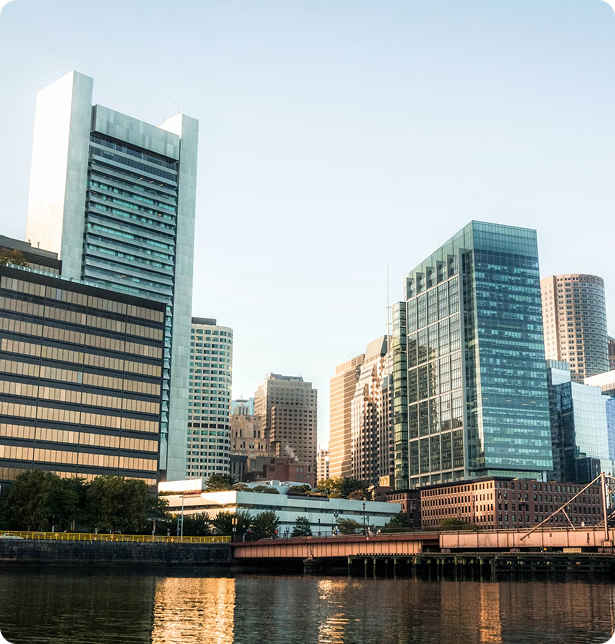
The most central neighborhoods in Boston are also some of the oldest, congregating on Boston Neck—the part that juts out north towards the Charles. They’re also very diverse, and you’ll be able to recognize when you’ve crossed the line from one neighborhood to the next.
- North End: The North End is synonymous with two things: Paul Revere & Italian food. The Old North Church in the North End provided Revere with his lantern cue. Later, Italian immigrants settled down in the area and built their families and community there.
- West End: The Boston Garden is the epicenter of the West End neighborhood, and most features are built around this imposing landmark.
- Downtown: Encompassing the historic core, the Financial District, the Theatre District, and Chinatown, it wouldn’t be a stretch to say Downtown has a little bit of everything.
- Beacon Hill: Home to Boston Common and the glittering, gilded Massachusetts State House, it’s hard to find a more picturesque neighborhood.
- Back Bay: Copley Square, the Prudential Center, Trinity Church, and Newbury Street are all found in Back Bay. It’s a melting pot to this very day.
Waterfront and Entertainment Areas
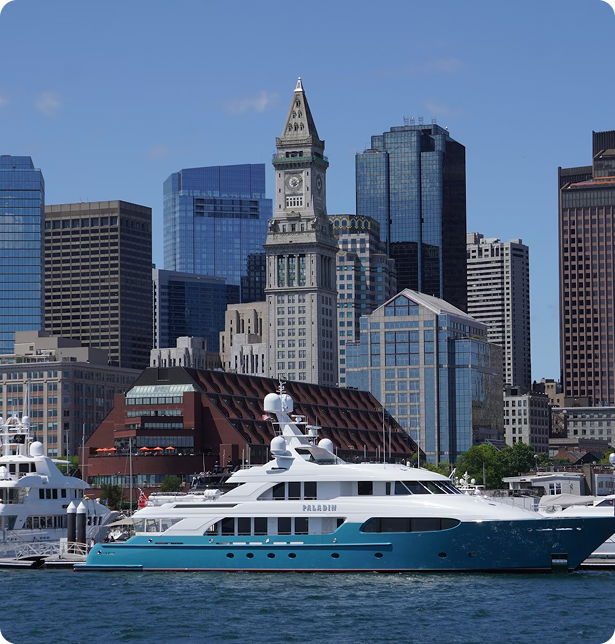
The distinctive cod atop the Old State House isn’t random; Boston has a serious maritime culture. With its harborside location and the Charles dividing Boston from Cambridge, there are tons of waterfront properties all around the city.
- Waterfront: There’s a proper waterfront district along the eastern edge of Boston Neck. You’ll know it by the numerous wharves, old customs houses, and masts dotting your field of vision.
- Seaport: Another waterfront neighborhood that doubles as an entertainment district, Seaport is the latest Boston neighborhood to be transformed as the city enters a new era.
- Everett, MA: Not a neighborhood but its own city, Everett is north of Boston but houses the Encore Boston Harbor, a luxury casino hotel.
- Charlestown: Just south of Everett and back within Boston city limits, Charlestown is a historic and charming location filled with waterfront dining and Revolutionary-war era sites.
University and Residential Districts
There are over 40 colleges and universities in metropolitan Boston, making just about every neighborhood technically a university district. That said, some areas feel more like a quintessential college town than a neighborhood within a larger city.
- Fenway/Kenmore: Home to Northeastern University (Go Huskies!) and Boston University (boo!). These rival schools both have access to Huntington Avenue, a main street that competes with any college town. It’s also home to the “Cathedral of Baseball,” Fenway Park.
- Chestnut Hill: Is it in Boston? Is it in Newton? Do we really care? Chestnut Hill is 6 miles west of downtown Boston and lays claim to Boston College. The quiet residential area is only kept awake by the sound of pages turning in the library.
- Cambridge: It is blasphemous to include Cambridge on a list of university neighborhoods in Boston because Cambridge is its own city. It also houses Harvard University, the nation’s oldest higher learning institution, and MIT, one of the premier scientific schools in America. Cambridge very much feels like a city from the 1600s, with winding streets, stone architecture, and expansive greenspaces.
- Somerville: Another independent city, Somerville is home to (parts of) Tufts University. Somerville really feels like its own city, with residential neighborhoods, busy commercial squares, and a college campus tucked away. Many a trip to Boston passes over Somerville, but they shouldn’t—there’s exploring to do here too.

Your Complete Boston World Cup Guide
Experience your World Cup fandom to the fullest with our Boston World Cup Guide. Find great watch parties, bars, breweries, events, and more for the 2026 tournament.