


Getting to Boston: Airports, Trains, and Driving Routes
Boston attracts more than 20 million tourists each year, and while most come to sample the city’s world-class amenities, being one of the most well-connected cities in the United States certainly doesn’t hurt.
Seven 2026 FIFA World Cup matches in Boston this summer are around the corner, making now the perfect time to start planning how you’ll make it into the city. Whether you’re leaning towards flying, driving, or hopping on one of the many trains to Boston, we’re here to break down the essentials of getting to the city.
Flying Into Boston
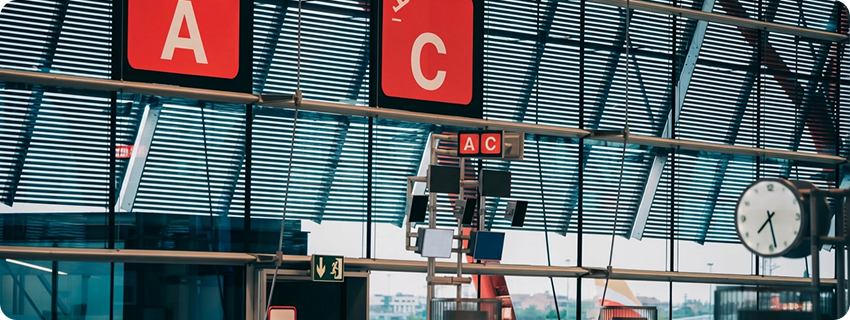
General Edward Lawrence Logan International Airport—usually shortened to Boston Logan International Airport—is the primary gateway to Massachusetts and the greater New England region. While the airport can be busy during peak travel times, it’s smaller and much more manageable than behemoths like JFK or Hartsfield–Jackson in Atlanta.
Logan International accommodates flights from more than 40 airlines and offers service to over 100 destinations across the country and around the world. From Amsterdam to Seoul and Toronto, many of these routes are direct, making the city easily accessible for Boston FIFA fans.
The airport is home to four terminals. These include:
- Terminal A: The Delta Airlines hub
- Terminal B: Southwest Airlines, American Airlines, and other domestic carriers
- Terminal C: The JetBlue Airways hub; also accommodates other domestic flights
- Terminal E: International flights and some domestic
Walking is the easiest way to get from one terminal to another, and most travelers will be able to traverse the 0.7 mile distance between A and E (the farthest apart) in around 15 minutes. Along the way, expect to see exhibits like the Hall of Flags and an homage to Massachusetts Music, as well as highly-rated restaurants and bars like Legal Sea Foods and Harpo. And if you’re curious, yes—there was once a Terminal D, but its gates were merged with those of C and E during past renovations.
Customs and Arrival Tips
Standard travel recommendations apply when flying into Logan International Airport. Specific points worth mentioning include:
- Baggage Claim: Retrieve your checked items from Level 1, near the Arrivals Roadway.
- Rideshares for Terminals A, C, and E: Designated areas to hail rideshare pickups (like Uber and Lyft) are within the Central Parking Garage.
- Rideshares for Terminal B: Arriving passengers can hail cars from Level 2 of the Terminal B Garage.
- Consider Public Transportation: Boston’s Blue Line subway connects to the airport via a shuttle. Riding it makes for a smooth way to enter the city.
Arriving by Train or Bus
While air travel might be the best way to reach Beantown from remote or international destinations, buses and trains to Boston can be a great option for 2026 FIFA World Cup fans in the U.S. The city is well-connected, and traveling by bus or train often makes for a more enjoyable experience than flying.
Boston has connections to much of the U.S. Northeast and Mid-Atlantic. Amtrak offers direct trains from NYC to Boston, as well as from Washington D.C., Philadelphia, Baltimore, and Providence. Longer distance routes are also available, with trains from Chicago to Boston, as well as cities like Cleveland and Richmond. Just be aware that these longer-distance routes also require lengthier travel times. Getting from Chicago to Boston, for example, takes around 22 hours. Make sure to bring a good book!
Bus service from nearby cities makes for another effective (and low-cost) way to see the Boston World Cup. Carriers like Greyhound, Peter Pan, and Megabus connect the city to New England and the Northeast, with frequent service from New York, Providence, Hartford, Philadelphia, and Washington D.C. While service is less regular (and travel times are longer), you can also find direct service from Buffalo, Pittsburgh, and Jersey City.
Greyhound buses also travel between Montreal and Boston, giving Quebec residents an affordable alternative to flying.
Driving to Boston for The FIFA World Cup?
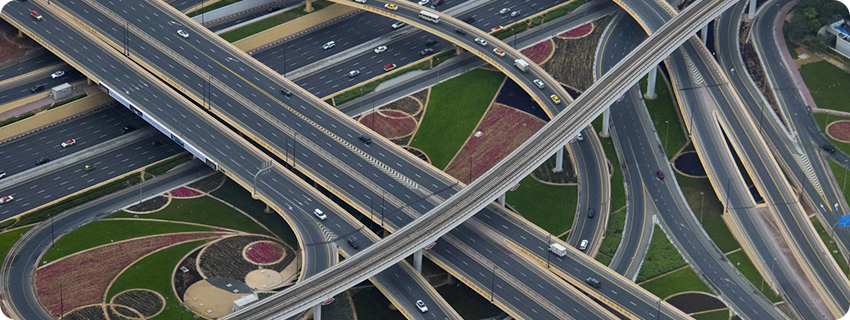
Boston, like many major cities, has a rather infamous reputation for its traffic. While congestion is common—particularly during peak travel times, more on that below—driving to the 2026 World Cup Boston can still work for some FIFA fans.
The three highways that traverse Boston include:
- I-90 (The Massachusetts Turnpike): The primary east-west route; also connects to Logan International Airport.
- I-93: The busiest highway; runs from north to south, passing through Downtown Boston and nearby suburbs.
- I-95 / Route 128: The encircling beltway that connects to the I-90 and I-93.
If you live in New England or even parts of New York State, driving into Boston can be an affordable and convenient way to catch highly-anticipated World Cup moments like the June 23rd England v. Ghana match. However, if you live outside of the Northeast, driving may require a feat of endurance you may not want to subject yourself to.
In general, expect traffic to peak during morning and evening rush hour, weekend afternoons, and event days. Parts of the I-93, specifically, can be notoriously difficult to traverse. On match days, plan on giving yourself significant time to reach Gillette Stadium, or park outside of the city core and ride the Massachusetts Bay Transportation Authority (MBTA) to avoid traffic altogether.
Tolls should also be a consideration—all are electronic and are collected by E-ZPass or mailed to your address (at a higher rate). Prices are dependent on distance traveled and vehicle type, and can range from $1-$14. Key toll locations include:
- I-90: On the NY border to Boston
- Callahan, Sumner, and Ted Williams Tunnels: Connecting Boston to Logan Airport and East Boston
- Tobin Memorial Bridge: Connecting Boston to Chelsea
Parking in and Around Boston
For World Cup fans traveling in 2026 who plan to drive to the city, understand that parking in Boston requires some planning. Generally, parking options are limited, regulated, and expensive—especially during major events, where availability drops further.
Throughout the city, most street parking is metered, limited to a few hours, or exclusive to Bostonians. Parking garages are common downtown and near transit hubs, but prices can fluctuate enormously, and space isn’t always guaranteed. In the city center, it’s not uncommon for daily limits to encroach on $50. Parking in Boston Airport is similarly pricey.
While free parking in Boston is hard to come by, apps like ParkWhiz and SpotHero allow you to pre-book spots, giving you peace of mind and saving you money. Park-and-ride also makes for a smart option, as garages outside of the city center have lower rates. Provided you give yourself sufficient time and park near an MBTA station, you can then take public transportation to Gillette Stadium.
Regional Travel Map and Planning Tips
Congestion peaks at predictable times, including on the weekends before matches. If you can arrive earlier in the day—or better yet, a day or two ahead—you’ll set yourself up to avoid delays. Likewise, consider looking at transit from a regional perspective. Taking public transportation, or even staying in a nearby city, can help you keep your sanity and avoid experiencing Boston’s roads at their busiest.
With some forethought and a bit of planning, getting to Boston for the 2026 FIFA World Cup will be a straightforward—and, perhaps even enjoyable—part of an unforgettable day.


Your Complete Boston World Cup Guide
Experience your World Cup fandom to the fullest with our Boston World Cup Guide. Find great watch parties, bars, breweries, events, and more for the 2026 tournament.